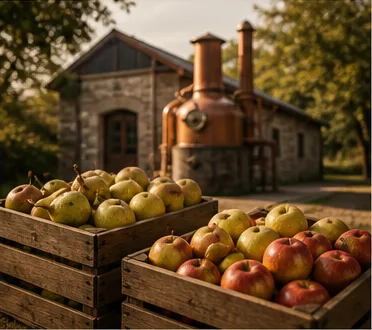
How we make fruit brandy: from our orchard meadows to the bottle
By AMH Distillery, Zaberfeld
· Updated 9 November 2026 · 5 min read
IN SHORT
We prepare a mash from ripe, sound fruit. During fermentation, yeast turns fermentable sugars into alcohol. We then distil the mash, aiming for a spirit in which the character of the fruit is still recognisable.
IN THIS ARTICLE
The work starts with blossom in our orchard meadows
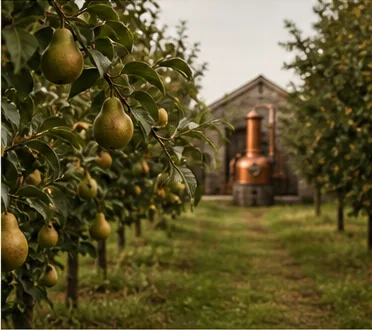
When the fruit trees blossom in the Zabergäu, there is no mash waiting in the distillery yet. An important part of the work is already taking place outside. We plant and tend our trees and follow them through the seasons. Bees from our own apiary visit the flowers and help with pollination. Fruit can develop from those pollinated blossoms and later become part of the harvest we use for our brandies.
That is one reason beekeeping and distilling belong together for us. What happens during blossom and in the orchard matters long after picking. The difference between a juicy pear, a spicy plum and a fragrant mirabelle begins outside, long before any of them reaches the still.
Harvesting fruit for flavour
Fruit destined for a brandy does not have to look as uniform as fruit on a shop counter. It needs to be ripe and sound. We judge the harvest by its condition and sort out fruit that is spoiled or badly damaged. Distillation cannot simply undo a problem with the original fruit, so selection is where we start.
Turning fruit into mash
After sorting, the fruit is prepared and crushed. Apples and pears present a different starting point from stone fruit. The way stones and other parts are handled depends on the fruit and the process. Crushing produces a mash of pulp and juice, where the yeast can get to the fermentable sugars.
During fermentation the yeast converts these sugars into alcohol and carbon dioxide, among other products. The aroma changes as well. Clean vessels and a controlled fermentation help keep the original fruit recognisable. This is where the alcohol is formed; distillation comes later.
The work at the still
We heat the fermented mash in the still. Alcohol and volatile aroma compounds pass into the vapour, which cools and condenses back into liquid. The distillate changes over the course of the run. We separate the early and late fractions from the heart, the part selected for the brandy.
The timing depends on what is happening during the run. We pay attention to how the aroma develops and when the fruit comes through clearly. A strong smell of alcohol is not the goal: we want someone nosing a pear brandy to be able to recognise pear.
Resting the spirit or putting it into wood
A brandy does not have to go straight into the bottle. It can rest in a neutral vessel if that suits the intended style. With a clear brandy, we want the fruit to come through without added wood notes. In a spirit intended for cask maturation, wood can add a second layer of flavour. Our cask-aged apple brandy cuvée is an example.
From bottling strength to the finished bottle
Before filling the bottles, the spirit is brought to the intended bottling strength. The bottles are then closed and labelled with information including the volume and alcohol by volume. Those details help when comparing two brandies: a difference in strength can change what you notice as much as a different choice of fruit can.
In the finished bottle, a harvest has become something you can smell and taste. For us, the test is whether the first aroma still takes you back to the fruit that started the work in the orchard.
What you smell in the glass starts with the fruit and reflects the choices made through harvest, fermentation, distillation and bottling.
Frequently asked questions
Can I have fruit from my own garden distilled?
Yes. Contact us before harvest with the type of fruit and an estimated quantity so we can discuss whether we can take it.
Must fruit brandy be matured in a cask?
No. Cask maturation is a style choice, not a requirement for a clear fruit brandy.
What distinguishes fruit brandy from Geist?
In a fruit brandy the alcohol comes from fermented fruit. A Geist takes its aroma from ingredients steeped in agricultural alcohol and then distilled.
Sources and further reading
Alcoholic beverages are for adults only. Please enjoy responsibly.