How to store spirits: gin, rum and liqueur after opening
By AMH Distillery, Zaberfeld
· Updated 9 November 2026 · 3 min read
IN SHORT
We recommend keeping full-strength spirits upright, tightly closed and away from sunlight and large temperature swings. For cream, egg and other sensitive liqueurs, follow the storage and use instructions for that particular product.
IN THIS ARTICLE
Choose a dark cupboard rather than a windowsill
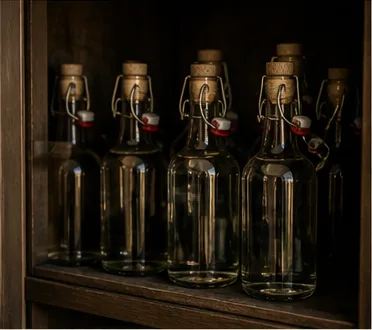
Spirits do not need to lie on their side like some wines. Prolonged contact with strong alcohol can affect a cork closure. A cupboard with a steady, moderate temperature is a better choice than a sunny shelf or a spot next to a radiator.
Choose a permanent place away from afternoon sun and the swings in temperature next to a cooker. Keep the spirit in its original bottle and pour out only what you need. The practical benefit is that the storage instructions and the name of the product stay with the bottle, even if it takes you a while to finish it.
What changes after you open a bottle
Air remains inside an opened bottle. Over time, the aroma and colour may change, and delicate top notes can fade. Check that the cap or stopper still seals properly, especially when little is left. Whisky does not continue its cask maturation in the bottle.
A loss of aroma does not always announce itself. A gin may smell less of fresh citrus, or the fruit in a brandy may fade more quickly than you remember. That is a different observation from an unusual smell or a changed consistency in a sensitive liqueur. Do not use the same rule of thumb to judge both cases.
Liqueurs need product-specific care
A herbal liqueur and a cream liqueur have different recipes. For our SAKI cherry cream liqueur, use the instructions for that bottle, including any advice for after opening. If you are unsure, ask us rather than borrowing a storage rule from another product.
If the label gives a period for use after opening, writing down the opening date can help. That note does not replace the printed date or the storage directions. If you cannot tell how a particular bottle was kept, we would rather discuss the product with you than offer a single shelf life for every kind of liqueur.
A dark cupboard is suitable for many spirits. A temperature or use instruction on the bottle takes priority.
Frequently asked questions
Can gin go bad after opening?
For a correctly stored, full-strength gin, loss of aroma is usually the more relevant issue. There is no single keeping time for all bottles.
Do opened liqueurs need refrigeration?
It depends on the recipe. Check the label, particularly for cream or egg liqueurs.
What if my liqueur looks or smells unusual?
If its condition has changed and you are unsure how it was stored, do not taste it to check. Ask the producer or discard it.
Sources and further reading
Alcoholic beverages are for adults only. Please enjoy responsibly.