Sugarcane juice or molasses: what difference does it make to rum?
By AMH Distillery, Zaberfeld
· Updated 9 November 2026 · 3 min read
IN SHORT
Rum can be distilled from fermented sugarcane juice or from fermented molasses or syrup from cane sugar production. The raw material matters, but fermentation, distillation and any time spent in a cask also shape the flavour.
IN THIS ARTICLE
Two familiar starting points
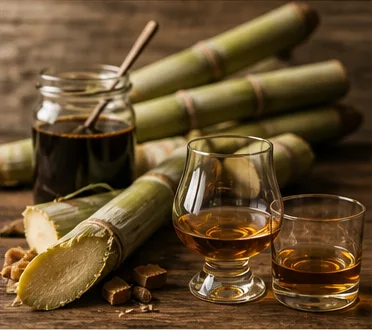
Cane juice is pressed directly from the cane and is generally processed promptly because it is perishable. Molasses is a by-product of sugar production that still contains fermentable sugars. Either can be used to make distinctive rum.
The two materials also come from different points in the process. Juice comes straight from pressing the cane. Molasses is what remains at a later stage of sugar production and has a different composition. In both cases, fermentation comes first: neither fresh juice nor thick molasses passes into the glass unchanged.
What you might notice in the glass
Some cane juice rums have grassy or herbal notes. Some molasses rums suggest caramel, ripe fruit or spice. Treat these as tasting clues rather than rules: fermentation and cask character can take either raw material in a different direction.
When we help someone choose, we ask how they intend to serve the rum. A bottle for a crisp Daiquiri may be different from the one they want to sip neat.
A rum that smells of vanilla or toasted wood is easily described as sweet before anyone has taken a sip. Try separating what you smell from what you actually taste. You may notice a caramel aroma and a relatively dry finish in the same glass. That observation is more useful than trying to infer the ingredients from the smell.
A fair side-by-side comparison
Use similar glasses and small pours at similar temperatures. Take the bottling strengths into account. Smell and taste first, then read the production notes; it is easier to notice your own impressions before the label tells you what to expect.
At the distillery, we find that asking how someone plans to drink the rum is a good place to start. Bright notes might work well in a drink with lime; a person sipping it neat may be more interested in the cask character. Compare the two rums before adding a mixer so you know which differences are coming from the bottles.
The raw material explains how a rum begins. The rest of the process helps explain why two bottles made from the same material can taste so different.
Frequently asked questions
Is cane juice rum better than molasses rum?
Neither raw material guarantees quality. Look at how the rum is made and whether its style suits you.
Does molasses mean the rum will be sweet?
No. Molasses is the starting material. A caramel aroma does not tell you whether the finished drink contains added sugar.
Is any cane juice rum rhum agricole?
No. The term has specific origin and production requirements; cane juice alone is not enough.
Sources and further reading
Alcoholic beverages are for adults only. Please enjoy responsibly.